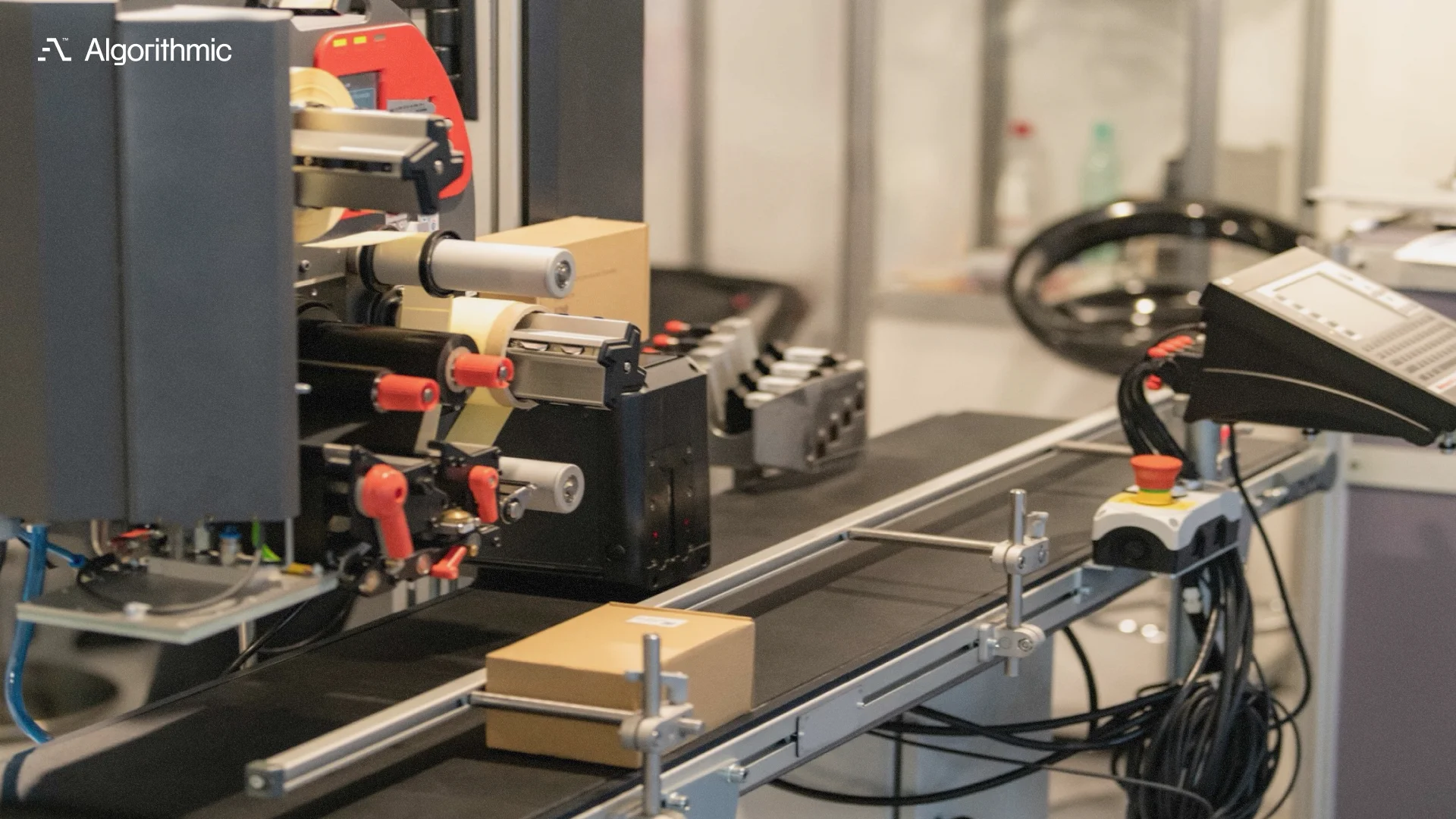
A global FMCG giant needed more than traditional QA. As their product lines scaled, minor surface damage and dimensional inconsistencies began slipping through legacy systems. We built an edge-first inspection platform that uses 3D vision and smart damage detection to spot flaws in real time, even on rapidly changing packaging formats. The end impact and results are faster lines, fewer errors, and smarter, scalable QA.
The challenge
A global Fast-Moving Consumer Goods enterprise shipping thousands of packaged products hourly struggled maintaining consistent quality across expanding box sizes and configurations. Traditional vision-based QA caught obvious defects, but frequent format changes, fast-moving lines, and variable packaging materials allowed subtle dimensional errors and minor surface damage to slip through undetected.
Core problems:
- Conventional off-site data processing risked slowing production lines or causing delays from network connectivity issues.
- Operators faced manual efforts updating manifests for each box type, introducing error and inventory mismatch risks.
- Rigid inspection thresholds designed for single SKU lines required recalibration whenever introducing new SKUs.
The customer needed precise, real-time shape measurement and surface damage detection - all while integrating seamlessly with established manufacturing execution software and gaining capability to work with multiple SKUs on single conveyor lanes seamlessly.
Our approach
The solution combined a comprehensive edge-based approach with 3D sensors for dimensional verification and RGB cameras for surface inspection.
Real-time scanning
Dimension estimation using high-resolution point clouds detected minuscule deviations in length, width, and height while switching between different box sizes. Multiple-angle photography identified tears, dents, label misprints, scuffs, and other damage. Automated reference checks on known standards minimised manual intervention and calibration.
Edge processing
All scanning and image analysis occurred locally, reducing latency and eliminating network dependency. Packages flagged as out-of-spec triggered automated sorting lines. Separated defective or dimensionally incorrect items before downstream processing.
Seamless integration
API-based interface updated facility software with exact package dimensions and QA results. The solution fit onto existing conveyors without full-scale re-engineering.
Inspection architecture
High-fidelity 3D cameras
Captured dense point clouds across varying conveyor heights, speeds, and packaging materials with internal algorithms filtering movement noise.
Lightweight AI models
Optimised damage detection pipeline and models for edge-grade processors, ensuring real-time results without sacrificing accuracy.
Automated updates
The system learned new baseline dimensions when introducing box styles. Operators confirmed once, then software continuously adapted.
Intuitive dashboards
Operators viewed pass/fail rates and live feeds on a centralised interface. Unusual spikes such as corner tear upticks triggered immediate review flags.
Technical approach
Two parallel inspection pipelines: surface integrity (local checks) and dimensional accuracy (global checks).
Sensor layer
Each conveyor station housed two sensors - one 3D scanner overhead and multiple angled RGB cameras - with an industrial-grade microcontroller handling data intake.
Edge compute node
A compact, specialised processor ran two parallel QA modules: local patch analysis for damage detection and global dimension analysis for shape verification. Each processed data locally generating pass/fail flags without cloud round-trips.
Central orchestrator
A supervisory software layer connected each edge node to the facility’s manufacturing execution system (MES), aggregating data for real-time dashboards and batch reports.
Local damage detector
Split incoming images into localised patches, inspecting each against known “normal” references via learned models, assigning local defect scores indicating tear, scuff, or mislabel likelihood.
Global dimension verifier
Pre-filtered spurious 3D points using outlier rejection algorithms, computed estimated package dimensions (length, width, height) from point clouds, and compared results against SKU specification tolerances.
MES integration
Edge nodes posted results (damage scores, dimension data, pass/fail flags) to message queues or REST endpoints monitored by MES. Failed packages triggered mechanical diverters removing items from main flow for manual review. Staff accessed live dashboards showing defect percentages, common damage types, dimension compliance rates, and line slowdowns.
The impact
Reduced downtime and rework
Instant detection of dimension or surface issues prevented entire batches of incorrect packaging from travelling further. That cut rework times by over 40% compared to the previous system, which only caught major anomalies.
Enhanced accuracy across SKUs
By automatically tuning sensors to new box sizes and design features, the solution maintained near 100% detection accuracy. Even subtle shape differences triggered an alert before merging into the final shipping queue.
Streamlined manifest management
Legacy MES updated package dimensions and QA status in real time. Operators eliminated manual data entry, removing frequent human error sources and saving administrative hours.
Future scalability
Since the platform was deployed on the edge - using industrial-grade sensors with onboard compute - adding new lines or expanding to other facilities became straightforward. Each inspection node runs autonomously, yet stays synchronised with the central database.
Lessons learned
Edge processing is key. Offloading heavy data analysis to local sensor compute removed the bottleneck of external servers and network latency, a critical gain for high-speed packaging lines.
Adaptive thresholding beats static rules. Packaging changes are inevitable in FMCG, and static models quickly become obsolete. A learning-based approach kept misclassification rates low across fluctuating SKUs.
Early intervention minimises waste. Instant sorting for defective or dimensionally incorrect items prevented defective packages from mixing with conforming stock, significantly reducing re-sorting and disposal costs.
Conclusion
For this large-scale FMCG client, the RGB-D-based quality assessment solution did more than just improve QA metrics - it optimised the way they managed inventory and assured product quality. By unifying shape verification and surface analysis within a single, automated workflow, the plant could easily accommodate new product sizes while achieving near-perfect detection rates for damaged or mislabeled packages. Most importantly, everything tied back into their existing manufacturing systems, ensuring minimal disruption and maximum ROI.
This project demonstrates Algorithmic’s computer vision capabilities applied at industrial scale - real-time detection, edge deployment, and integration with existing manufacturing systems. The backend infrastructure was designed for autonomous edge operation with centralised monitoring, a pattern we apply across factory, logistics, and quality assurance environments.